One section at a time.
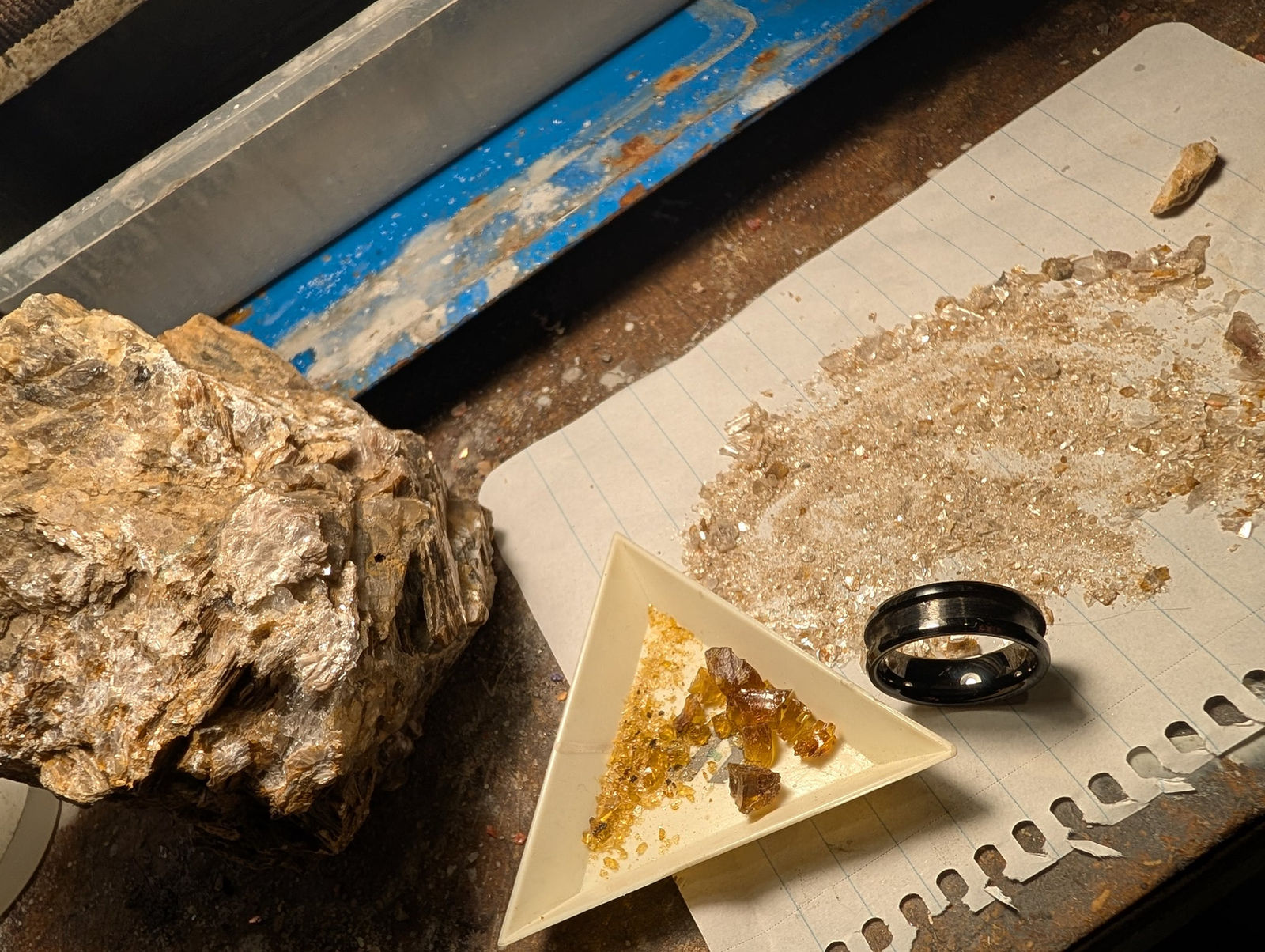
A metal band with pockets, a different material fitted and bonded into each one at a time, then shaped and polished until metal and inlay read as one surface.
At the bench
Five steps
 01
The sections are the plan.
The core arrives already divided — on the current work, thirteen triangular sections. Which material goes in which section is decided before anything is cut.
 02
Each material is prepared for its section.
Cut and fitted to one pocket at a time. Stone is not uniform; fitted by hand, the variation is the character of the piece.
- 03
Each section is inlaid and bonded.
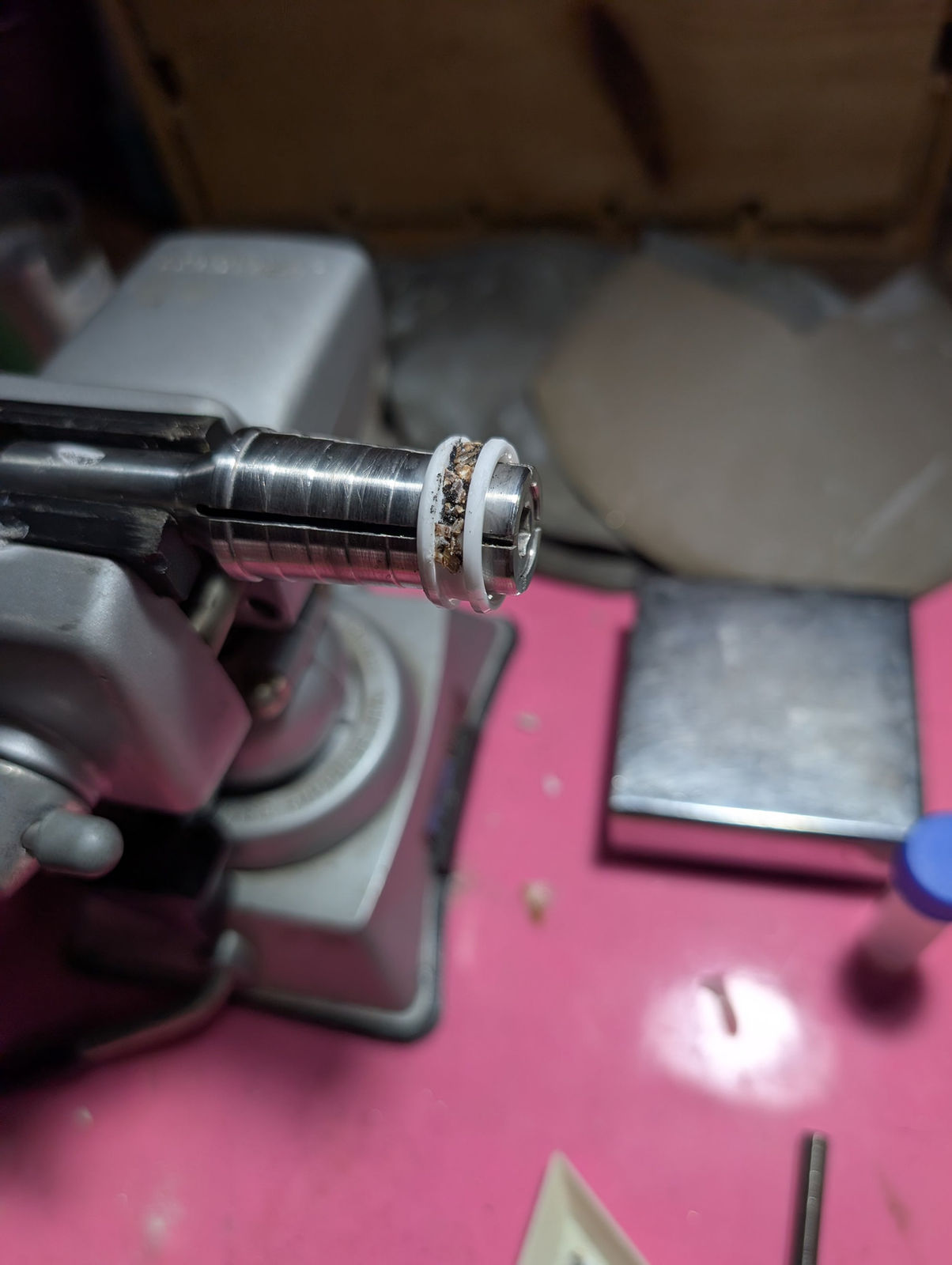
The fitted material is set into its pocket and bonded with CA glue — then the next section, a different material. On the Prismatic Mosaic, thirteen times.
 04
Shaped back into one surface.
The excess comes down until stone, coral, opal, and steel meet at the same height all the way around.
 05
Polished and finished.
The final pass makes the surface read as a single object instead of a list of ingredients.
Before the inlay
Every inlay ring starts as a plain metal band — the core — with the sections the inlay will fill.
- Core
- Stainless steel, polygon profile: flat facets, so the band divides into flat, triangular sections.
- Sand casting
- Bold, textured work. Fast; the original pattern survives. Can’t hold undercuts.
- Resin-print lost-wax
- The precise route: a castable resin model holds within about a tenth of a millimetre.
- On record
- Which route a core took is recorded with the piece.